
Colon Cancer Symptoms: What Are the Early Warning Signs and When Should You See a Doctor?
Learn the early warning signs of colon cancer, when to see a doctor, and why early detection matters. A clear, patient-friendly guide to the symptoms.
The early warning signs of colon cancer include changes in bowel habits, blood in the stool, persistent abdominal discomfort, unexplained weight loss, and ongoing fatigue. Many symptoms appear only in later stages, so you should see a doctor promptly if any of these last more than a few weeks.
Colon cancer is one of the most common cancers worldwide, yet it is also one of the most treatable when caught early. The challenge is that its earliest signs are often subtle—or absent altogether. Many people dismiss symptoms as everyday digestive trouble, delaying the visit to a doctor that could make all the difference.
This guide explains what to look out for, which symptoms warrant a conversation with your doctor, and why early detection matters so much. Understanding these signs won’t replace a medical opinion, but it can help you act sooner rather than later.
What Is Colon Cancer?
Colon cancer, also called colorectal cancer when it involves the rectum, develops in the large intestine. It usually begins as small, non-cancerous growths called polyps on the inner lining of the colon. Over time, some of these polyps can become cancerous.
Because polyps often cause no symptoms, they can grow unnoticed for years. This is why screening is so valuable—it can detect and remove polyps before they ever turn into cancer.
What Are the Early Warning Signs of Colon Cancer?
Early-stage colon cancer may produce no symptoms at all. When symptoms do appear, they can be easy to overlook. Watch for the following warning signs, particularly if they persist or worsen over time.
Changes in Bowel Habits
A lasting change in how your bowels work can be an early clue. This includes:
- Diarrhoea or constipation that doesn’t resolve
- A change in the consistency of your stool
- A feeling that your bowel doesn’t empty completely
Occasional changes are normal. It’s the persistent ones—lasting more than a few weeks—that deserve attention.
Blood in the Stool or Rectal Bleeding
Blood in your stool is one of the more noticeable warning signs. It may appear bright red, or it can make the stool look dark or tarry. While bleeding is often caused by less serious conditions such as haemorrhoids, it should never be ignored.
Persistent Abdominal Discomfort
Ongoing cramps, gas, bloating, or pain in the abdomen can signal a problem. If this discomfort is frequent and doesn’t have an obvious cause, it’s worth discussing with your doctor.
Unexplained Weight Loss
Losing weight without changing your diet or exercise habits can be a sign of several conditions, including colon cancer. Cancer cells can affect how your body uses energy, leading to weight loss that seems to come from nowhere.
Fatigue and Weakness
Feeling constantly tired or weak may result from slow, hidden blood loss in the digestive tract. This can lead to anaemia, which leaves you drained even after rest.
When Should You See a Doctor About Colon Cancer Symptoms?
You should book an appointment if you notice any of the warning signs lasting longer than two to three weeks. In particular, seek medical advice promptly if you experience:
- Blood in your stool or rectal bleeding
- A persistent change in bowel habits
- Unexplained weight loss
- Abdominal pain that doesn’t go away
- Ongoing fatigue with no clear cause
Most of the time, these symptoms turn out to be something less serious. But only a doctor can rule out colon cancer with proper examination and testing. Acting early gives you the best possible outcome.
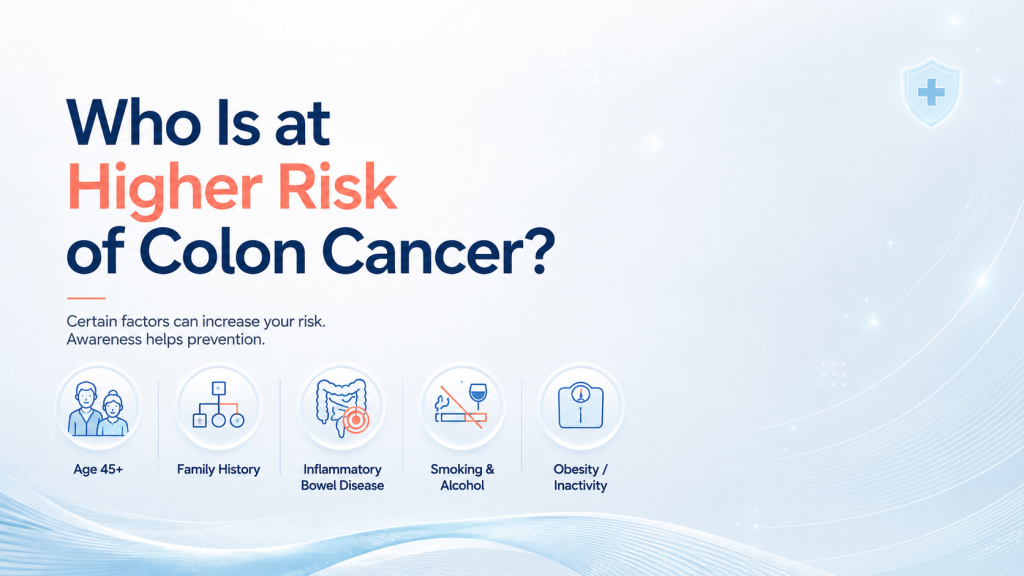
Who Is at Higher Risk of Colon Cancer?
Certain factors raise your likelihood of developing colon cancer. Knowing your risk can help you and your doctor decide when to start screening. Common risk factors include:
- Age: Risk increases after 50, though cases in younger adults are rising
- Family history of colon cancer or polyps
- Inflammatory bowel disease, such as Crohn’s disease or ulcerative colitis
- A diet high in red and processed meats and low in fibre
- Lifestyle factors, including smoking, heavy alcohol use, and physical inactivity
- Obesity and type 2 diabetes
Having one or more risk factors doesn’t mean you’ll develop colon cancer—but it does mean staying vigilant about symptoms and screening.
Why Does Early Detection Matter So Much?
Colon cancer is highly treatable when found early. When the cancer is caught before it spreads beyond the colon, survival rates are significantly higher than when it’s diagnosed at a later stage.
Screening tests, such as colonoscopies, can detect cancer early or even prevent it by removing polyps. For most people at average risk, regular screening is recommended from around age 50. If you have a family history or other risk factors, your doctor may suggest starting earlier.
Taking the Next Step for Your Health
The most important thing you can do is listen to your body and act on changes that don’t go away. Colon cancer symptoms are often vague, but persistent signs—especially rectal bleeding, changes in bowel habits, or unexplained weight loss—should always be checked by a doctor.
If any of the warning signs described here sound familiar, don’t wait. Book an appointment with your doctor and ask about screening options. Early conversations lead to early answers, and when it comes to colon cancer, early answers save lives.
Frequently Asked Questions
What are the first signs of colon cancer?
The first signs often include changes in bowel habits, blood in the stool, persistent abdominal discomfort, unexplained weight loss, and ongoing fatigue. In its earliest stages, colon cancer may cause no symptoms at all, which is why screening is so important.
Can you have colon cancer without any symptoms?
Yes. Early-stage colon cancer frequently causes no noticeable symptoms. Polyps and early cancers can develop silently for years, which is why regular screening is recommended even for people who feel completely well.
How long can colon cancer symptoms last before you should worry?
If symptoms such as changes in bowel habits, abdominal pain, or bleeding last longer than two to three weeks, you should see a doctor. Persistent symptoms are more concerning than occasional or short-lived ones.
Is blood in the stool always a sign of colon cancer?
No. Blood in the stool is often caused by less serious conditions such as haemorrhoids or anal fissures. However, because it can also signal colon cancer, any rectal bleeding should be evaluated by a doctor.
At what age should I start screening for colon cancer?
For people at average risk, screening usually begins around age 50. If you have a family history of colon cancer, inflammatory bowel disease, or other risk factors, your doctor may recommend starting earlier.
Who is most at risk of developing colon cancer?
Risk is higher for people over 50, those with a family history of colon cancer or polyps, individuals with inflammatory bowel disease, and those with lifestyle factors such as a low-fibre diet, smoking, heavy alcohol use, obesity, and physical inactivity.
