
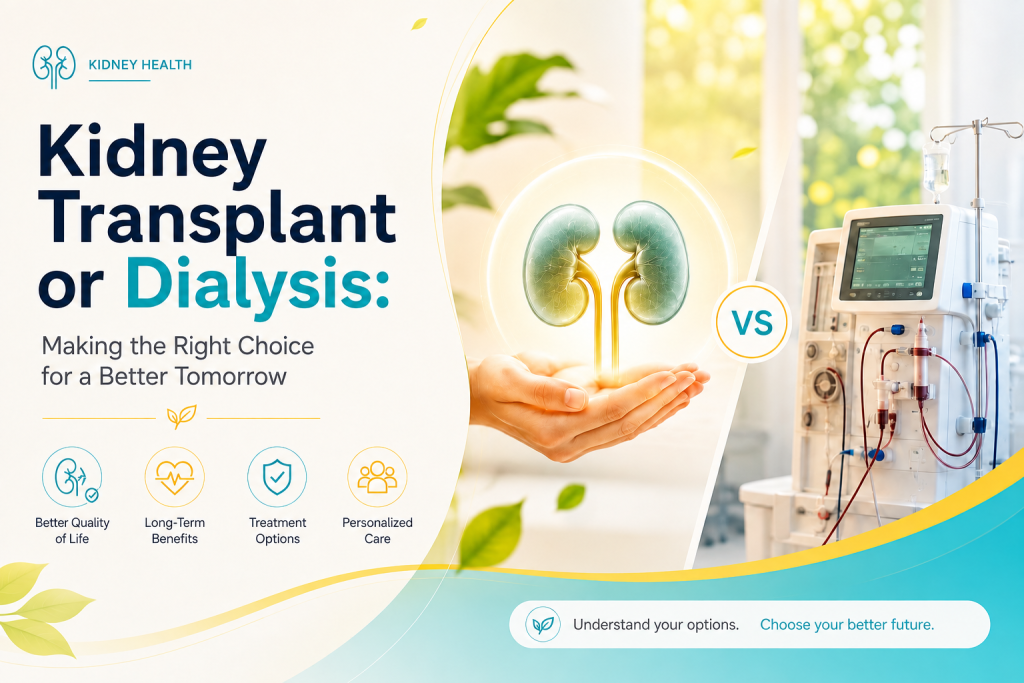
For most patients with end-stage kidney disease, a successful kidney transplant offers better long-term survival rates and quality of life than dialysis. However, not every patient is a suitable candidate for transplantation. Age, heart health, immune history, and other medical factors all influence which treatment is the safer and more effective choice.
End-stage renal disease (ESRD) forces patients and their families into one of the most difficult medical decisions imaginable. When the kidneys can no longer filter waste from the blood, two primary treatment paths exist: dialysis or kidney transplantation. Both can sustain life, but they differ enormously in terms of survival outcomes, daily burden, and long-term wellbeing.
This article examines both options from a clinical perspective — including which patients carry the highest surgical risk, what makes rejection more likely after transplantation, and how to weigh the decision when complications such as age or heart disease are involved.
How Does Dialysis Compare to Kidney Transplantation for Survival?
Dialysis replaces some kidney function by filtering the blood either through a machine (haemodialysis) or through the lining of the abdomen (peritoneal dialysis). It keeps patients alive but does not restore normal kidney function. Patients typically require three sessions per week, each lasting three to five hours.
Kidney transplantation, by contrast, replaces the failed organ entirely. A functioning donor kidney takes over the job, and most recipients can return to near-normal daily activity.
Survival data consistently favour transplantation. According to the National Kidney Foundation, patients who receive a kidney transplant have a significantly longer life expectancy than those who remain on dialysis — often by 10 to 15 years when comparing matched populations. Transplant recipients also report higher quality of life scores, fewer dietary restrictions, and greater freedom from the clinical routine that dialysis demands.
That said, transplantation is not universally safer. For certain patients, the risks of surgery and the lifelong immune suppression required can outweigh the benefits of leaving dialysis behind.
Which Patients Face the Highest Surgical Risk from Kidney Transplantation?
Elderly Patients
Age alone does not disqualify someone from transplantation, but it does increase surgical risk considerably. Older patients — typically those above 65 to 70 — are more likely to have reduced organ reserve, meaning their heart, lungs, and liver may struggle to cope with the physiological demands of major surgery.
Elderly transplant candidates also face:
- Higher rates of post-operative infection, partly due to age-related immune changes
- Slower recovery, increasing the risk of complications such as deep vein thrombosis and pneumonia
- Greater sensitivity to immunosuppressive drugs, which can trigger side effects including bone loss, diabetes, and opportunistic infections
- Reduced graft survival, since older recipients may not outlive the transplanted kidney
For elderly patients who are otherwise healthy and have strong social support, transplantation can still be a sound choice. The key is a thorough pre-transplant assessment rather than age-based exclusion.
Patients with Cardiovascular Disease
Heart disease is the leading cause of death in kidney transplant recipients. The relationship between chronic kidney disease and cardiovascular deterioration is well established — years of ESRD frequently lead to left ventricular hypertrophy, coronary artery disease, and heart failure.
Patients with significant pre-existing cardiac conditions face elevated risks at several stages:
- During surgery: General anaesthesia and fluid shifts place substantial stress on a compromised heart. Intraoperative cardiac events, including arrhythmia and myocardial infarction, are more common in this group.
- In the immediate post-operative period: The body’s inflammatory response to surgery can destabilise existing cardiac conditions.
- Long-term: Immunosuppressive medications, particularly corticosteroids and calcineurin inhibitors, can worsen hypertension and dyslipidaemia, compounding cardiovascular risk.
For patients with severe cardiac disease — such as an ejection fraction below 30%, recent myocardial infarction, or uncontrolled heart failure — dialysis may represent the safer long-term path until cardiac function is optimised. In some cases, combined heart-kidney transplantation is considered, though this remains a complex and relatively rare intervention.
Other High-Risk Patient Groups
Beyond age and heart disease, several other conditions elevate transplant risk:
- Morbid obesity (BMI above 35–40): Associated with wound complications, delayed graft function, and higher rates of surgical mortality
- Active infection or malignancy: Transplantation is generally contraindicated until these conditions are resolved, as immunosuppression would accelerate both
- Severe peripheral vascular disease: Poor vascular anatomy in the pelvis can make surgical anastomosis technically difficult and increases the risk of graft thrombosis
- Poorly controlled diabetes: While diabetic nephropathy is one of the most common causes of ESRD, uncontrolled blood glucose significantly worsens post-operative outcomes
What Is the Risk of Rejection After Kidney Transplantation?
Rejection occurs when the recipient’s immune system identifies the donor kidney as foreign and mounts an attack against it. All transplant recipients require lifelong immunosuppressive therapy to reduce this risk, but rejection can still occur — either acutely in the weeks following surgery or chronically over months and years.
Why Are Patients Who Have Undergone Plasma Exchange at Higher Risk of Rejection?
Plasma exchange (also known as plasmapheresis) is a procedure that removes specific antibodies or proteins from the blood. It is used in transplantation for two primary reasons: to prepare highly sensitised patients for surgery by reducing donor-specific antibodies (DSAs), or to treat acute antibody-mediated rejection after transplantation.
However, patients who require plasma exchange before or after transplantation are, by definition, already immunologically complex. The elevated rejection risk in this group stems from several interconnected factors:
- High panel reactive antibody (PRA) levels: Patients who are highly sensitised — often due to previous transplants, multiple blood transfusions, or pregnancies — have pre-formed antibodies that can attack the donor organ even after plasma exchange reduces their titre temporarily
- Rebound antibody production: Plasma exchange removes circulating antibodies but does not eliminate the plasma cells producing them. Without concurrent treatment (such as intravenous immunoglobulin or rituximab), antibody levels can rebound rapidly after the procedure, triggering acute antibody-mediated rejection
- Complement activation: Even at reduced antibody concentrations, residual DSAs can activate complement pathways, causing microvascular damage to the graft
- Chronic rejection risk: Patients managed with plasma exchange post-transplant remain at elevated risk of chronic allograft nephropathy, a gradual scarring process that erodes graft function over years
For sensitised patients considering transplantation, a detailed immunological work-up — including crossmatching and PRA assessment — is essential. Desensitisation protocols that combine plasma exchange with other agents have improved outcomes, but these patients require close monitoring and should be transplanted at centres with specialist expertise in managing high-immunological-risk cases.
So Which Option Is Right for a Given Patient?
The honest answer is: it depends. Transplantation outperforms dialysis for survival and quality of life in the general ESRD population. But for patients with severe cardiac disease, advanced age combined with multiple comorbidities, or a complex immunological history, the risk-benefit calculation shifts considerably.
The decision should be made collaboratively between the patient, their nephrologist, and a transplant team experienced in assessing high-risk candidates. Optimising modifiable risk factors — including blood pressure, blood glucose, cardiac function, and weight — before listing for transplantation can meaningfully improve outcomes for those who ultimately proceed.
Making the Decision: What Patients Should Know
Understanding the medical landscape is only part of this decision. Patients and families also need honest conversations about what daily life looks like on each path — the routine of dialysis versus the surgical risk of transplantation, followed by years of medication management.
For those exploring transplantation options abroad, including in countries such as Iran where living-donor kidney transplants for international patients are legally permitted, working with an experienced and reputable medical facilitation agency is critical. A thorough pre-transplant evaluation, specialist follow-up, and transparent communication between local and international medical teams are non-negotiable components of a safe outcome.
Kidney disease is a long road. The best decision is an informed one.
Frequently Asked Questions
Is dialysis ever better than a kidney transplant?
For patients who are not surgical candidates — due to severe heart disease, active infection, malignancy, or advanced age with multiple comorbidities — dialysis is the safer treatment. Transplantation carries significant risks that may outweigh the benefits in medically complex individuals.
How long can a patient survive on dialysis?
Survival varies widely. Some patients live more than 20 years on dialysis, while others deteriorate more quickly depending on their underlying health. However, average life expectancy on dialysis remains considerably lower than for transplant recipients.
What does ‘sensitised patient’ mean in kidney transplantation?
A sensitised patient has pre-formed antibodies against potential donor tissue, often due to prior transplants, pregnancies, or blood transfusions. Sensitisation makes it harder to find a compatible donor and increases the risk of rejection.
Can a patient with heart disease receive a kidney transplant?
Yes, but only after careful cardiac evaluation and, in many cases, treatment to stabilise cardiac function. Patients with severe or uncontrolled heart disease are typically not listed for transplantation until their cardiac status improves.
What is plasma exchange used for in kidney transplantation?
Plasma exchange is used to reduce harmful antibodies in sensitised patients before transplantation or to treat antibody-mediated rejection after surgery. While it can be effective, it does not eliminate the underlying immune sensitisation and requires combination therapy to reduce the risk of antibody rebound.
This article was prepared by the Medipars editorial team for informational purposes only and does not constitute medical advice, diagnosis, or treatment. Always consult a qualified healthcare professional for guidance specific to your medical situation.
