
Heart Valve Repair and Replacement in Iran: Procedures, Surgeons, Costs and Hospitals
Heart Valve Surgery in Iran
Iran offers surgical heart valve repair, valve replacement and minimally invasive catheter-based procedures such as TAVI at specialist cardiac hospitals in Tehran, Mashhad and Isfahan. Surgical valve replacement is advertised from roughly $6,500–$9,000, and TAVI from around $9,000. The right treatment depends on the affected valve, disease severity and the patient’s overall health, confirmed through echocardiography and a cardiac surgeon’s assessment.
Heart valve disease affects millions of people worldwide, and for many international patients, Iran has become a destination worth researching for valve repair and replacement. Iranian cardiac centres provide a full range of treatments, from traditional open-heart surgery to catheter-based interventions, supported by experienced cardiovascular surgeons and dedicated international patient services.
This guide explains what heart valve disease involves, the procedures available in Iran, how to choose a hospital and surgeon, indicative costs, and what recovery typically looks like.
What Is Heart Valve Disease?
Heart valve disease occurs when one or more of the heart’s four valves — the aortic, mitral, tricuspid and pulmonary valves — fail to work correctly. These valves keep blood flowing in the right direction through the heart. When a valve narrows (stenosis) or fails to close properly (regurgitation), the heart has to work harder, which can eventually lead to heart failure if left untreated.
Some people are born with valve abnormalities, while others develop valve disease later in life due to ageing, calcium build-up, infections or rheumatic fever. Common symptoms include breathlessness, chest discomfort, fatigue, dizziness and irregular heartbeat, though early-stage valve disease can be symptom-free.
Surgery or intervention is usually considered when stenosis or regurgitation becomes severe, when the heart enlarges or weakens, or when symptoms persist despite medication. The decision is always based on echocardiography results and a specialist’s clinical assessment.
What Heart Valve Procedures Are Available in Iran?
Iranian cardiac centres offer both valve-preserving repair techniques and full valve replacement, along with minimally invasive catheter-based alternatives.
Heart Valve Repair
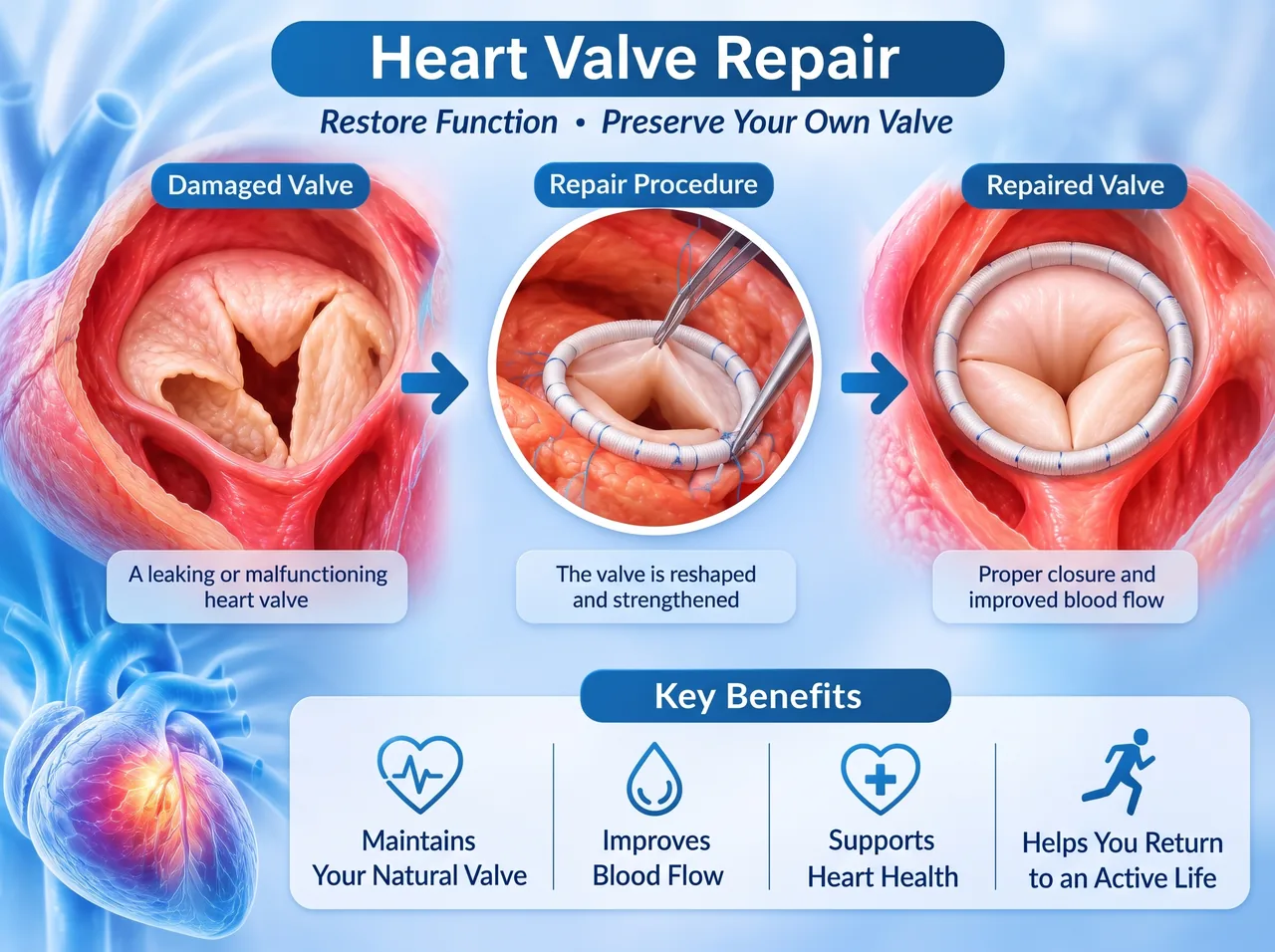
Valve repair corrects a damaged valve while preserving the patient’s own tissue. Mitral valve repair commonly uses annuloplasty (reshaping the valve ring) or leaflet reconstruction, and is often preferred over replacement for suitable mitral conditions. Aortic and tricuspid valve repair follow similar principles, though not every damaged valve — particularly a heavily calcified aortic valve — is suitable for repair.
Heart Valve Replacement
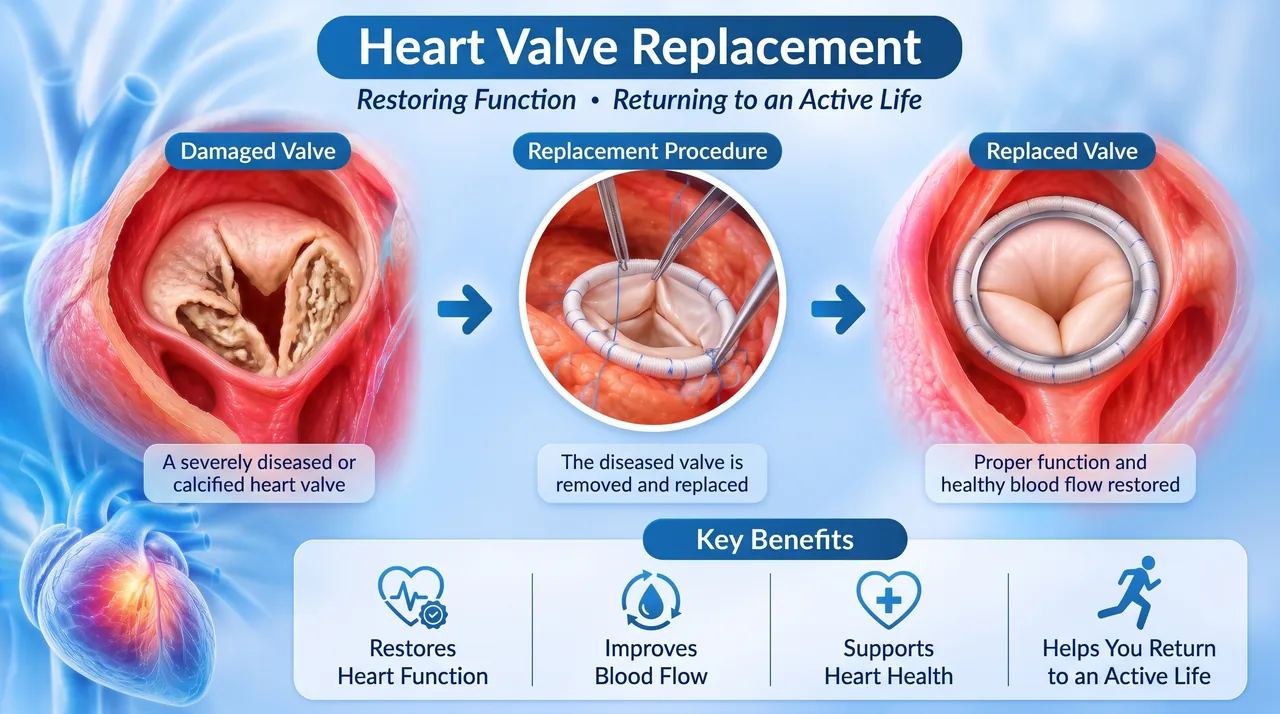
When repair isn’t possible, surgeons remove the diseased valve and implant a prosthetic one. Patients can choose between:
- Mechanical valves, which are highly durable (often lasting decades) but require lifelong anticoagulant medication such as warfarin and regular INR blood testing.
- Biological (tissue) valves, made from bovine or porcine tissue, which typically don’t require lifelong anticoagulation solely because of the valve but have a shorter lifespan, generally 10–20 years.
Aortic, mitral and tricuspid valve replacement are all available through conventional open-heart surgery in Iran.
Catheter-Based and Minimally Invasive Options
For eligible patients, Iranian hospitals also offer:
- TAVI (Transcatheter Aortic Valve Implantation), which replaces a diseased aortic valve via a catheter, usually inserted through the groin, without open-heart surgery.
- TEER/MitraClip, a catheter-delivered device that helps mitral valve leaflets close more effectively in patients with significant mitral regurgitation.
- Balloon valvuloplasty, used to widen narrowed valves, particularly the pulmonary valve and selected mitral or aortic stenosis cases.
- Minimally invasive and robotic-assisted surgery, using smaller incisions for selected mitral and aortic procedures, where facilities and surgeon experience allow.
Which Hospitals and Surgeons Treat Heart Valve Disease in Iran?
Several specialist cardiovascular centres in Iran treat international patients. Availability of specific procedures and valve models should always be confirmed directly with the hospital.
Best Hospitals for Aortic Valve Surgery in Iran
Some of the main cardiovascular centres to consider for aortic valve treatment include:
- Shahid Rajaei Cardiovascular Medical and Research Center – Tehran: A specialised cardiovascular hospital providing cardiac surgery, valve replacement and interventional cardiology services.
- Tehran Heart Center – Tehran: A major cardiac treatment and teaching centre offering cardiovascular surgery and diagnostic services.
- Imam Khomeini Hospital – Tehran: A university-affiliated hospital providing specialised cardiovascular and surgical services.
- Razavi Hospital – Mashhad: A private hospital offering cardiovascular services and cardiac surgery.
Best Hospitals for Mitral Valve Repair & Replacement in Iran
Mitral valve surgery requires specialised surgical expertise, particularly when valve repair is possible instead of replacement.
Hospitals to consider include:
- Shahid Rajaei Cardiovascular Medical and Research Center – Tehran: Provides specialised heart valve surgery and cardiovascular interventions.
- Tehran Heart Center – Tehran: Offers cardiac surgery and treatment for different types of valve disease.
- Shahid Chamran Heart Center – Isfahan: A cardiovascular centre providing cardiac surgery and specialised heart care.
- Razavi Hospital – Mashhad: Offers cardiovascular treatment and surgical services.
Patients should confirm the availability of the specific mitral valve repair technique and the surgeon’s experience before choosing a hospital.
Hospitals Offering TAVI and Other Minimally Invasive Procedures
For patients who are suitable candidates for catheter-based valve treatment, the following centres are worth investigating:
- Shahid Rajaei Cardiovascular Medical and Research Center – Tehran: A specialised cardiovascular centre with cardiac catheterisation and interventional services.
- Tehran Heart Center – Tehran: Provides specialised cardiovascular diagnostics, interventional cardiology and cardiac treatment.
- Parsian Hospital – Tehran: Lists TAVI and other cardiovascular interventional services among its treatment facilities.
Surgeons:
- Professor Saeid Hosseini: A professor of cardiac surgery at Shahid Rajaei Cardiovascular Medical and Research Center. His professional background includes specialised training in aortic surgery and mitral valve repair.
- Dr Ahmad Ali Amirghofran: Known for his work in complex heart valve repair and minimally invasive cardiac surgery. He established an early minimally invasive cardiac surgery centre in Iran.
- Professor Mohammad Hossein Mandegar: A professor of cardiovascular surgery at Tehran University of Medical Sciences whose areas of expertise include heart valve repair and replacement.
- Dr Seyed Hossein Ahmadi Tafti: A cardiovascular surgeon affiliated with Tehran Heart Center, with a professional profile listing valve repair and replacement among his areas of expertise.
For TAVI and other catheter-based procedures, Dr Ali Mohammad Haji Zeinali is another specialist worth considering. His professional profile describes experience in TAVI and MitraClip procedures. He is an interventional cardiologist, not a cardiac surgeon.
How Much Does Heart Valve Surgery Cost in Iran?
Treatment costs in Iran are generally advertised as lower than in many Western countries, though prices vary by hospital, surgeon and valve type.
| Heart Valve Procedure | Estimated Cost in Iran (USD) |
|---|---|
| Heart Valve Repair Surgery | $3,500–$7,500 |
| Aortic Valve Replacement (AVR) | $6,500–$9,000 |
| Mitral Valve Replacement (MVR) | $6,500–$10,000 |
| Tricuspid Valve Repair or Replacement | $6,000–$9,000 |
| Pulmonary Valve Replacement | $6,000–$10,000 |
| Double Valve Replacement | $8,500–$12,500 |
| Multiple Valve Repair or Replacement | $10,000–$15,000 |
| Minimally Invasive Valve Surgery | $7,500–$11,000 |
| Robotic-Assisted Valve Surgery | Individual quotation required |
| TAVI / TAVR (Transcatheter Aortic Valve Implantation) | $9,000–$20,000 |
| Balloon Mitral Valvotomy (PTMC) | Individual quotation required |
| Balloon Valvuloplasty for Other Valves | Individual quotation required |
| MitraClip / TEER (Transcatheter Mitral Valve Repair) | Individual quotation required |
Mechanical vs Biological Heart Valve Replacement: Cost Considerations
Patients undergoing heart valve replacement may receive either a mechanical or a biological valve. The choice can influence the overall treatment cost and long-term medical expenses.
- Mechanical heart valve: These valves are generally more durable and can last for many years. However, patients usually require lifelong anticoagulant medication, such as warfarin, together with regular INR monitoring.
- Biological heart valve: These valves are made from animal tissue and generally have a more limited lifespan than mechanical valves. Lifelong anticoagulation is not usually required solely because of the biological valve, although other medical conditions may require it.
The cost of either option depends on the manufacturer, valve model and hospital package. The cardiac surgeon selects the most appropriate valve according to the patient’s age, medical condition, lifestyle and treatment preferences.
Factors Affecting the Cost of Heart Valve Surgery
The main factors influencing treatment costs include:
- Type of procedure: Repair, replacement and catheter-based treatments have different costs.
- Affected valve: Aortic, mitral and tricuspid procedures may have different surgical requirements.
- Valve type: Mechanical and biological prostheses have different prices.
- Surgeon’s fees: Fees vary according to experience and specialisation.
- Hospital selection: Private and specialised cardiovascular hospitals may charge different rates.
- Hospital stay: Longer ICU and hospital stays increase the total cost.
- Additional procedures: Combined valve surgery and coronary bypass may increase expenses.
- Medical complications: Additional treatment or prolonged recovery may affect the final bill.
What Is Included in the Cost of Heart Valve Surgery?
The inclusions depend on the hospital and medical tourism package. Patients should confirm whether their quotation covers:
- Cardiac surgeon and anaesthesia fees.
- Hospital operating theatre charges.
- Artificial heart valve and surgical materials.
- Intensive care and standard hospital accommodation.
- Routine laboratory tests and medical examinations.
- Standard post-operative care and consultations.
Medication after discharge, additional hospital days, accommodation outside the hospital, international flights and long-term follow-up may be charged separately.
What Does Recovery Look Like After Heart Valve Surgery?
Recovery depends heavily on the technique used:
- Open-heart valve repair or replacement: typically 5–7 days in hospital, including intensive care, with full recovery taking 6–12 weeks.
- Minimally invasive valve surgery: around 3–7 days in hospital, often with a somewhat faster return to normal activity.
- TAVI: usually just 1–3 days in hospital, with most patients recovering over 6–10 weeks.
Medication depends on the valve type: mechanical valves generally require lifelong warfarin with regular INR monitoring, biological valves may need only temporary anticoagulation or antiplatelet therapy, and TAVI patients are commonly prescribed antiplatelet medication. As with any heart surgery, risks include bleeding, infection, blood clots, arrhythmia and, rarely, the need for a further procedure — all of which should be discussed with the treating specialist beforehand.
International patients should arrange to take home their full medical records, echocardiography results and medication instructions so their local cardiologist can continue follow-up care.
Planning Treatment in Iran
For international patients, the typical planning process involves the following steps:
- Send medical records and echocardiography results for review by the treating team
- Receive a treatment plan and cost estimate based on your specific condition
- Confirm admission dates and arrange travel accordingly
- Allow sufficient recovery time before flying home:
- 3–4 weeks for open-heart surgery
- 2–3 weeks for minimally invasive surgery
- 1–2 weeks for TAVI
These are planning estimates only; the treating surgeon must confirm fitness to travel.
Anyone considering heart valve treatment abroad should treat this guide as a starting point, not a substitute for direct consultation with a cardiac specialist who can review individual test results and medical history.
Frequently Asked Questions
Yes. Specialist cardiac hospitals in cities including Tehran, Mashhad and Isfahan offer valve repair, replacement and, in selected centres, catheter-based procedures such as TAVI.
Published packages place surgical aortic valve replacement at roughly $6,500–$9,000, with mitral and tricuspid procedures typically quoted individually. Always request a detailed written quotation before travelling.
Repair preserves the patient’s own valve tissue, while replacement removes the damaged valve and implants a mechanical or biological prosthesis. The surgeon recommends the best option based on the valve’s condition.
Selected hospitals, such as Parsian Hospital in Tehran, advertise TAVI services. Availability and valve models should be confirmed directly with the hospital before planning treatment.
Roughly 3–4 weeks after open-heart valve surgery, 2–3 weeks after minimally invasive surgery, and 1–2 weeks after TAVI, subject to the surgeon’s confirmation that you’re fit to fly.
Mechanical valves last longer but require lifelong anticoagulation; biological valves usually avoid lifelong blood thinners but may need replacing sooner. The right choice depends on age, lifestyle and medical history.
Sources
- Cleveland Clinic: Heart Valve Disease: Symptoms & Treatment
- Cleveland Clinic: Mitral Valve Repair: Procedure & Recovery
- Cleveland Clinic: Heart Valve Replacement: Surgery & Recovery
- Cleveland Clinic: Transcatheter Aortic Valve Replacement (TAVR)
- Cleveland Clinic: After Transcatheter Aortic Valve Replacement
- Cleveland Clinic: Mitral Valve Disease: Types, Symptoms and Treatment
- NHS: Recovering from a heart valve replacement
- NHS: Complications of a heart valve replacement
- MedlinePlus: Heart valve surgery
- MedlinePlus: Aortic valve surgery – minimally invasive
- MedlinePlus: Taking warfarin
- British Heart Foundation: TAVI (transcatheter aortic valve implantation) procedure
- Journal of Clinical Medicine (2023): Acute Changes in Right Ventricular Function in Pediatric Patients with Pulmonary Valve Stenosis Undergoing Percutaneous Valvuloplasty: A Speckle-Tracking Study
Written by: Dr. Nikpajooh, Medical Content Specialist with a background in cardiovascular health and international patient care. Dr. Nikpajooh focuses on helping patients navigate complex medical decisions with clear, accurate and accessible information.
Last reviewed: 14 November 2026
