
Dental Implants in Iran: Cost, Trip Planning and Follow-Up
Dental implant in Iran
A dental implant replaces a missing tooth with an artificial root in the jaw, a connector called an abutment, and a crown on top. You can have implants placed in Iran, from a single tooth to a full set of teeth. One Medipars package covers the operation, doctor visits, pre-op and post-op care, accommodation, airport transfers and an English interpreter for medical purposes.
Send your details through the Make An Enquiry form or WhatsApp, and a coordinator gets back to you.
Dental Implant Cost in Iran and What Moves the Price
Your dental implant price in Iran is set in a personal quote prepared for your treatment plan. The table below shows the treatment price and the international patient package price, with what the package includes listed under it.
Once you have the quote, it stays fixed unless something exceptional happens, such as a canceled flight.
On the treatment side, an implant quote in this market usually covers the implant, the abutment and the crown for each tooth. Extractions, bone grafts and temporary teeth are often listed as separate items.
We prepare your quote from the records you send us. The figure depends mainly on:
- how many implants you need, from one tooth to a full set
- the implant brand and material you choose
- whether a bone graft or a sinus lift is needed first to build up the bone
- the abutment and crown type, such as all-ceramic zirconia or porcelain fused to metal
- temporary teeth to wear while the implants heal
- a full-arch plan such as All-on-Four, which is priced as its own treatment
- how many trips the plan needs
Dental Implants Iran vs Turkey, India and Treatment at Home
Implants usually cost far less in Iran, Turkey and India than at home in the UK, Canada or the US. What you give up is convenience: you travel, and conventional implants mean more than one trip.
At home in the UK, Canada or the US, you avoid travel, and your follow-up appointments are close by. There is no language barrier either. The treatment itself, however, costs much more.
Turkey and India are established dental travel destinations with lower prices than the home markets. There, as in Iran, the flights and the number of visits add to your total.
In Iran, a large and competitive dental market keeps treatment prices well below those at home. The country also has many dental specialists with university postgraduate training, and such specialists commonly place implants. With Medipars, your treatment comes in one package with accommodation, airport transfers and an English interpreter for medical purposes.
The other trade-off comes once you are home: hands-on care is with a local dentist, while our follow-up reaches you remotely. If you want a lower price with experienced specialists and can plan the trips, Iran is a strong choice over treatment at home.
Who Places Your Implants and Where You Are Treated
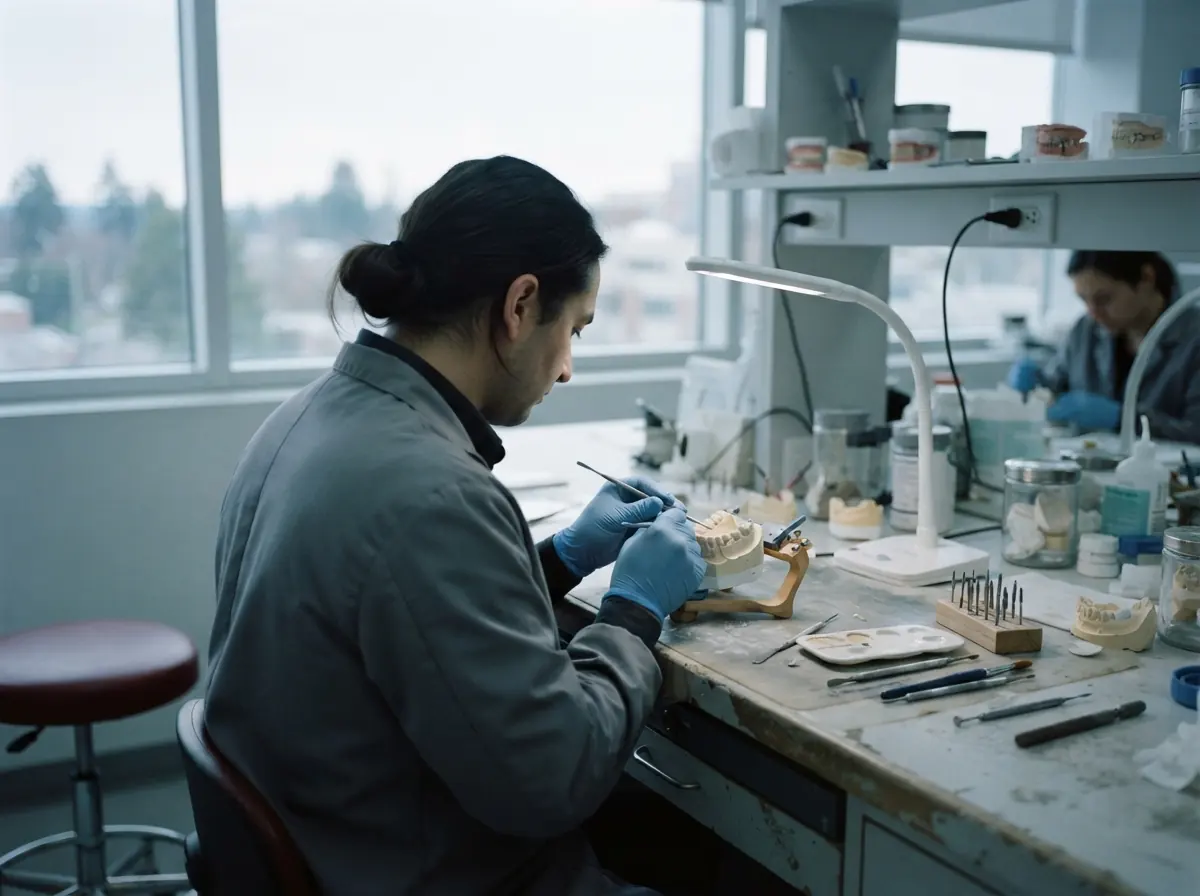
In Iran, implants are usually placed by an oral and maxillofacial surgeon, a periodontist (gum specialist) or a dentist trained in implant surgery. A restorative dentist or prosthodontist then designs your crown, and a dental laboratory makes it.
Patients from abroad commonly have their dental implant in Tehran, at one of the private clinics where many of Iran’s dental specialists work. If you are treated there, the clinic, hotel and airport are all in one city.
Iran’s dentists train at long-established university dental schools. After the general dental degree, specialists complete postgraduate programs in fields such as oral surgery, periodontics and prosthodontics.
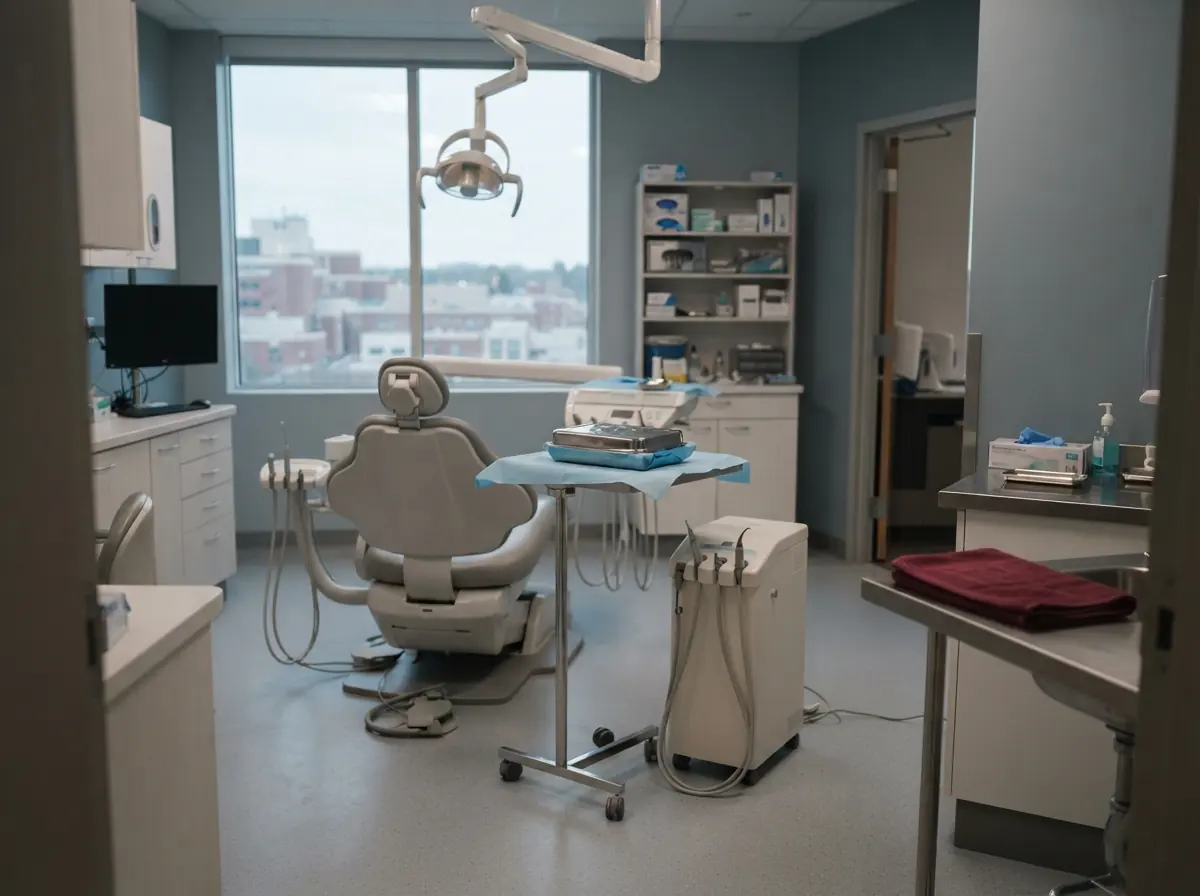
Good implant work also depends on the clinic’s equipment and records. A well-equipped implant clinic usually has:
- a sterile surgical room set aside for implant surgery
- a documented implant system, so you can take home the brand and details of the implant in your jaw for future care
What Medipars Arranges, From First Message to Follow-Up at Home
Planning treatment abroad on your own means booking and checking each part of the trip yourself. With Medipars, one package covers the operation, doctor visits, pre-op and post-op care, accommodation, airport transfers and an English interpreter for medical purposes only. Airport tickets, medication and the visa for a companion who travels with you are not included. You deal with one contact for all of it.
At the clinic, the interpreter works between you and the dental team, so you can ask about your plan and understand each answer.
Your follow-up continues free of charge after you return to your home country.
A Medipars coordinator handles that follow-up over WhatsApp. When the free period ends, you can still consult your doctor through us.
How the Treatment Trip Works and How Long You Stay
Conventional implants usually mean a placement trip and a later trip for the final crowns, fitted once the bone has bonded to the implants. A temporary tooth can be fitted on the first trip if the bone is firm enough, but final crowns need the later trip. Full-arch plans follow their own staging, explained under All-on-Four below.
You can start with records you may already have. Send a recent panoramic X-ray or CBCT scan if you have one, plus clear photos of your teeth. Add a note of which teeth are missing and your medical history, including smoking, gum problems and the medicines you take.
Your first stay covers the examination and scans, the surgery, a check-up and the wait after placement before you can fly. The later stay, for fitting the crowns, is usually shorter.
Here is the whole process, step by step, from your first enquiry to your final crowns:
- You send your enquiry with your records.
- The dental team reviews your case, and we send you a quote for your plan.
- You set travel dates that fit the plan.
- A driver meets you on arrival and takes you to your hotel.
- At the clinic, the dentist examines you and takes the scans used for planning.
- The implants are placed under local anesthetic.
- A check-up before your flight lets the dentist look at the healing area.
- You fly home while the implants bond with the bone, and we keep in touch for follow-up.
- On the later trip, the dentist checks the healing and fits your final crowns.
How a Dental Implant Works and Which Option Fits Your Case

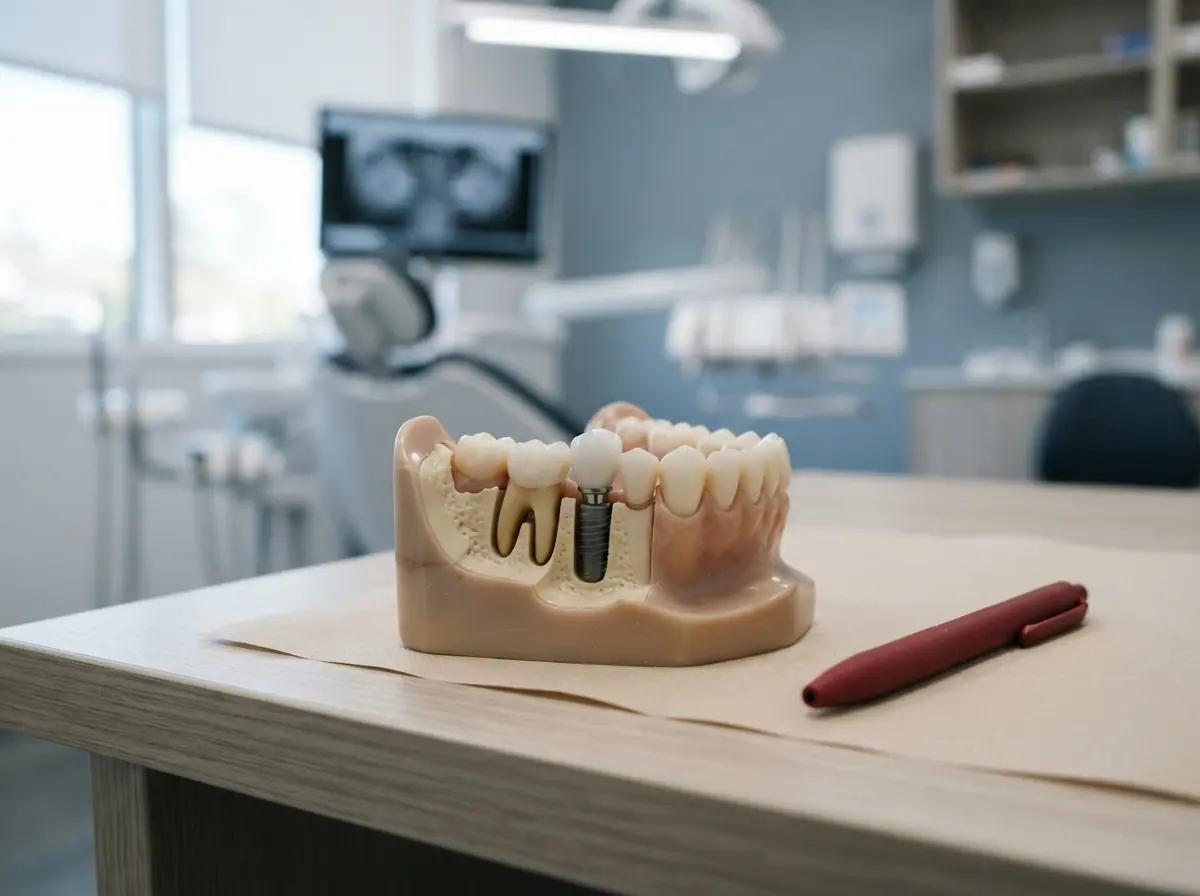
An implant takes the place of a lost tooth root. The dentist places a titanium post in your jawbone, and the bone bonds to its surface as it heals. An abutment (a small connector) and a crown are then fitted on top.
Compared with a bridge, an implant stands on its own, so the healthy teeth beside the gap are not ground down to hold it. Compared with a denture, it is fixed in place rather than taken out at night.
Titanium remains the standard material for implant posts. Zirconia posts, made of a tooth-colored ceramic, have less clinical evidence behind them so far. Zirconia crowns, which sit on top of the implant, are a separate and common choice.
Implant systems range from premium international brands to lower-cost lines, and the brand is one of the main factors in your price. A widely used brand also matters after you fly home, because a dentist there can find matching parts more easily for repairs.
The usual options depend on how many teeth are missing and how strong your bone is:
- a single implant with a crown, for one missing tooth
- an implant-supported bridge, where a few implants carry a bridge for several missing teeth in a row
- same-day or immediate loading, where a temporary tooth goes on the implant soon after placement, only if the bone holds the implant firmly enough
All-on-Four and Other Full-Arch Implants
As the name says, All-on-Four holds a full set of fixed teeth in one jaw on four implants. The back implants are often placed at an angle, which makes better use of the bone that remains in the jaw.
It suits people who have lost most or all teeth in a jaw, or whose remaining teeth cannot be saved. As with any implant, the assessment of your bone decides whether it can go ahead.
Full-mouth treatment is usually staged across trips. Extractions and implant placement are often done in one surgery, and a fixed temporary bridge is commonly fitted soon after. The final bridge follows on a later trip, once healing is complete.
Other full-arch options use more implants per jaw to carry a fixed bridge, or a removable overdenture that clips onto implants. A full-mouth plan is quoted separately from single implants. Its price depends on the number of implants, the bridge material and the temporary teeth.
Before Treatment: Who Is Suitable and How to Prepare
Before any plan is made, the dentist checks your jawbone, your gums and your general health. You need enough jawbone height and volume to hold the implant, which is measured on an X-ray or CBCT scan. Implants are also usually placed only once a person has stopped growing.
Smokers have a much higher failure rate, and an implant service may ask them to stop at least 6 months before treatment starts. Gum disease also lowers success, so it is treated first when active.
If your bone is too thin or too low, a bone graft can build it up first. In the upper back jaw, a sinus lift can add bone. Either step adds to the cost and can add a healing stage and another trip.
Tell the dentist about pregnancy, past radiotherapy to the head and neck, and conditions such as diabetes or a bleeding disorder. Mention medicines such as steroids or blood thinners too. Let the dental team weigh all of this rather than ruling yourself in or out.
Getting ready for surgery day is simple:
- Bring a list of every medicine you take, and do not stop a prescribed one unless the dentist tells you to.
- Use any mouthwash or antibiotics the dentist prescribes, exactly as directed.
- Eat well in the days before, and get a full night’s rest before surgery.
On the Day of Surgery: Anesthesia and What Happens
Implant surgery is done with a local anesthetic injection, so the area is numb while the dentist works. What you usually feel is pressure and vibration, and sedation can be offered if you feel anxious.
Placement usually follows any extraction or bone graft that needs to heal first, though these are sometimes done in the same surgery. The healing period and the crown come after. In the chair, the surgery follows these steps:
- The dentist checks the implant position planned from your scan.
- A small opening is made in the gum to reach the bone.
- The bone is prepared with a sequence of drills to the planned width and depth.
- The implant is placed in the prepared bone.
- The gum is closed with stitches, or a healing cap is fitted on the implant.
Recovery, Aftercare and Flying Home
After surgery, expect some discomfort and swelling for the first few days, then about a week of milder soreness. Bruising and minor bleeding can also occur. Numbness usually passes as the anesthetic wears off and the swelling settles.
Cold compresses on the cheek, the painkillers the dentist advises, soft cool food and rest with your head raised all ease these first days. Many stitches dissolve on their own, and others are removed at a check-up.
A mild temperature can follow oral surgery. Contact the dentist right away if a fever rises or lasts, or if pain or swelling grows instead of settling. Numbness that does not wear off is also a reason to get in touch.
Your dentist confirms when you are fit to fly. As a guide, a published review sets the minimum gap between implant placement and a flight at 72 hours, longer after a sinus lift. It also notes that the evidence on this is limited.
For the first days at the hotel, follow these aftercare rules:
- Keep the toothbrush off the wound at first, and brush the rest of your teeth as usual.
- From the next day, rinse gently with the prescribed mouthwash or with salt water.
- Do not spit forcefully or drink through a straw, because the suction can disturb the healing area.
- Avoid smoking while the wound heals.
How Long Implants Last and What Can Go Wrong
Implants can keep working for many years when your bone and gums stay healthy and you clean around them every day. Long-term studies show about 90% of implants still in place and working a decade after placement.
Gum health matters over the years. For people with gum disease, the success rate falls to 80 to 85% over 7 years. Implants cannot decay, but plaque can inflame the gum and bone around them, which is why regular cleaning and check-ups are important.
Like any surgery, implant treatment carries real risks. Problems that can occur include:
- infection at the implant site
- the implant not bonding with the bone
- an implant placed in a poor position
- nerve injury that causes numbness or tingling in the lip or chin
- an allergic reaction
Common Questions About Dental Implants Abroad
Iran is a good fit if you want experienced specialists at a lower price than at home and can travel more than once.
Iran suits you if a lower price is your priority and you can return for a later trip, which full-mouth implants usually need. A fixed quote matters more than a low headline price, and ours changes only for exceptional events, such as a canceled flight. Our package also covers accommodation, airport transfers, an English interpreter for medical purposes, pre-op and post-op care, the operation and doctor visits.
Turkey, India and Iran are common dental travel destinations where implant prices are usually lower than in the UK, Canada or the US.
The price of a single implant depends mainly on the implant brand, the crown type and whether you need a bone graft first. We set your price in a personal quote once we have reviewed your records.
Iran has a long tradition of university dental education, with dental schools in many cities training general dentists and specialists. A large home demand for dental care keeps many clinics in practice, and that competition is one reason prices stay lower.
What Our Patients Say
While coming iran little nervous, because I don't know how thing's to be gone,but after arriving iran all arrangements are very good accommodation,food hospital,all hospital body test done so smoothly.
Not feel alone on this trip thanks to all people Monika ma'am,Tanus,saed all are good people I meet.
In hospital surgery day due to pain mix imotions because of pain but day by day how pain relieve is unthinkable and within 3day feel like nothing changes in my body and I am same as before.It's beautiful country and big heart lovely people in Iran and all I meet this trip Thankyou everyone will remember forever.
I share my this experience with people's and motivate them to come to Iran for medical treatment.
Thank you 🤝🙏🏻
Dear Dr.Yousef Ataipour, & team…
I want to express my heartfelt gratitude for the exceptional care and treatment you provided during my recent surgery…Your professionalism, compassion, and dedication to your patients are truly inspiring. Thank you for taking the time to listen to my concerns and for providing me with the best possible care. I'm grateful for your expertise and kindness… thank you so very much…
TO,
HASHEMINEJAD HOSPITAL TEHRAN Team,I'm writing to express my sincere appreciation for the outstanding care and hospitality I received during my recent stay at your hospital. From the moment I arrived, I was treated with kindness, respect, and compassion. The staff were attentive, responsive and went above and beyond to ensure comfort and well-being…Please know that your hard work and dedication do not go unnoticed….
Thank you again for everything.
The care and hospitality we received at HASHEMINE HOSPITAL TEHRAN was truly exceptional. The doctors, nurses, and staff were all incredibly kind, compassionate, and professional. They took the time to listen to our concerns, answered all our questions and provided us with the best possible care. I'm grateful for their expertise, dedication, and kindness. The hospital's commitment to patient care is evident in every aspect of their service.
Thank you so much for the great care and surgery you performed on my brother.. I wud like to thank all the doctors n his team n all the hospital staff especially the nurses,who have made such a huge difference for him…he is feeling much better and I appreciate all the efforts n support…
Hasheminejad hospital Tehran
Thanks to Monika n Aamir for all the hospitality n being so supportive in every aspect…thanks again we will come back n visit this beautiful city n explore it again…my special thanks to Thanush n sayid for being so kind n supportive…they made things easier for us…pls do keep in touch and we will keep u posted about Arun n his health… we thoroughly enjoyed our stay n are happily going back….forgot to mention this beautiful apartment we stayed at it made us feel at home…thank you 🙏
I was afraid when I came to a surgery like this.but wheni saw the Hospital formality, it was make a confidence for me. And now I finished my all jobs and i am going to back to back my home. This hospital and all off the teams are very well.
Thanks to all your team specially Monica to have patience with us. Keep it up for this noble job.
Each one of have helped us throughout our stay here.Keep the good work going. God bless you all.
The people around me did a very good job of keeping us comfortable all the time. They were available 24/7 . The hospital staff also did a great job. Our only concern was not knowing This place is good for medical tourism.
The journey to health
Everything was so well planned and went really smoothly. The medical leader( translator) was such a big help . He helped with everything and took care of everything very well. The hospital was so clean and every one of the staff was so well mannered and so kind. The Tehran city and all Iran is very clean and very neat .so enjoyable.
Amazing
The treatment with the help of all the surgeons doctors nurses and other support staff was really great and the people are very warm and willingness to help always
Wonderful experience
Yeah its really good experience. Good respecting peoples with cute smile faces. Well trained staffs and good facilities are there really great experience in my view
The people are very friendly,respecting and helpful.what thay promised thay did it and thay made our trip very enjoyable and unforgatable.
Ask for Your Personal Implant Quote
To start, all we need is a message with the dental records you already have and a short note on your health.
We then prepare a quote for your treatment plan and help you arrange the trip around it.
References (4)
- British Dental Journal (via Hebrew University CRIS): Dental tourism and the risk of barotrauma and barodontalgia (2023)
- Materials (Basel, Switzerland): A Critical Review of Dental Implant Materials with an Emphasis on Titanium <i>versus</i> Zirconia (2015)
- Cambridge University Hospitals NHS Foundation Trust: Dental implants in restorative dentistry | CUH
- Leeds Teaching Hospitals NHS Trust: Dental Implants
