
Congenital Heart Defect Repair in Iran: Procedures, Surgeons and Costs
Congenital Heart Surgery in Iran
Iran offers specialised treatment for congenital heart defects, combining paediatric and adult cardiac surgery, catheter-based procedures and minimally invasive techniques. International patients can access cardiovascular hospitals such as Shahid Rajaei Cardiovascular Hospital and the Children’s Medical Center in Tehran, with costs ranging from roughly $2,300 to $8,600 depending on the defect and treatment method.
Iran has become an established destination for patients seeking specialised cardiac care, including diagnosis and treatment of congenital heart defects. Iranian hospitals provide a range of paediatric and adult cardiac services, from catheter-based procedures to complex open-heart surgery. International patients can access specialist consultations, diagnostic assessments and surgical treatment, with costs depending on the type of defect, the treatment method and individual medical needs.
What is heart defect repair?

Heart defect repair refers to medical or surgical procedures used to correct structural abnormalities of the heart or its major blood vessels. These abnormalities can affect blood flow, oxygen circulation and the heart’s ability to function properly. Treatment may involve open-heart surgery, minimally invasive techniques or catheter-based procedures, depending on the type and severity of the defect.
What are congenital heart defects?
Congenital heart defects are structural problems that develop before birth, affecting the heart’s walls, valves or major blood vessels. Some are detected during pregnancy or shortly after birth, while others remain unnoticed until childhood or adulthood. Severity varies: some defects require only monitoring, while others need early intervention or complex surgery.
The most common congenital heart defects include:
- Atrial Septal Defect (ASD): An opening in the wall separating the two upper chambers of the heart.
- Ventricular Septal Defect (VSD): A hole in the wall between the two lower chambers.
- Patent Ductus Arteriosus (PDA): A blood vessel that remains open after birth when it should normally close.
- Tetralogy of Fallot: A combination of four heart abnormalities that affects blood flow and oxygen levels.
- Atrioventricular Septal Defect (AVSD): An abnormality involving the walls and valves between the heart chambers.
- Pulmonary Valve Stenosis: Narrowing of the pulmonary valve, restricting blood flow from the heart to the lungs.
- Transposition of the Great Arteries (TGA): A condition in which the two main arteries leaving the heart are connected to the wrong chambers.
When is heart defect repair necessary?
Repair may be recommended when an abnormality significantly affects blood circulation, oxygen levels or heart function. Common indications include breathing difficulties, poor growth in children, recurrent respiratory infections, fatigue, abnormal heart rhythms and heart enlargement. The decision to operate depends on the patient’s age, symptoms, diagnostic findings and risk of complications — not every congenital heart defect requires immediate treatment.
What treatment techniques are used for heart defect repair in Iran?
The treatment approach depends on the specific defect, the patient’s age and overall health, and the complexity of the abnormality.
Open-heart surgery corrects complex or significant structural abnormalities. The surgeon accesses the heart through a chest incision, usually with a heart-lung machine maintaining circulation during repair. It is commonly used for Tetralogy of Fallot, complex VSD and AVSD, and TGA.
Minimally invasive surgery uses smaller incisions or specialised techniques, which may reduce surgical trauma and shorten recovery for suitable patients. Not all defects can be treated this way.
Catheter-based closure involves inserting a thin, flexible tube through a blood vessel, usually in the groin, and guiding it towards the heart. Specialised devices or balloons then close an opening or treat a narrowed valve. This method is commonly used for selected ASD, PDA and pulmonary valve stenosis cases.
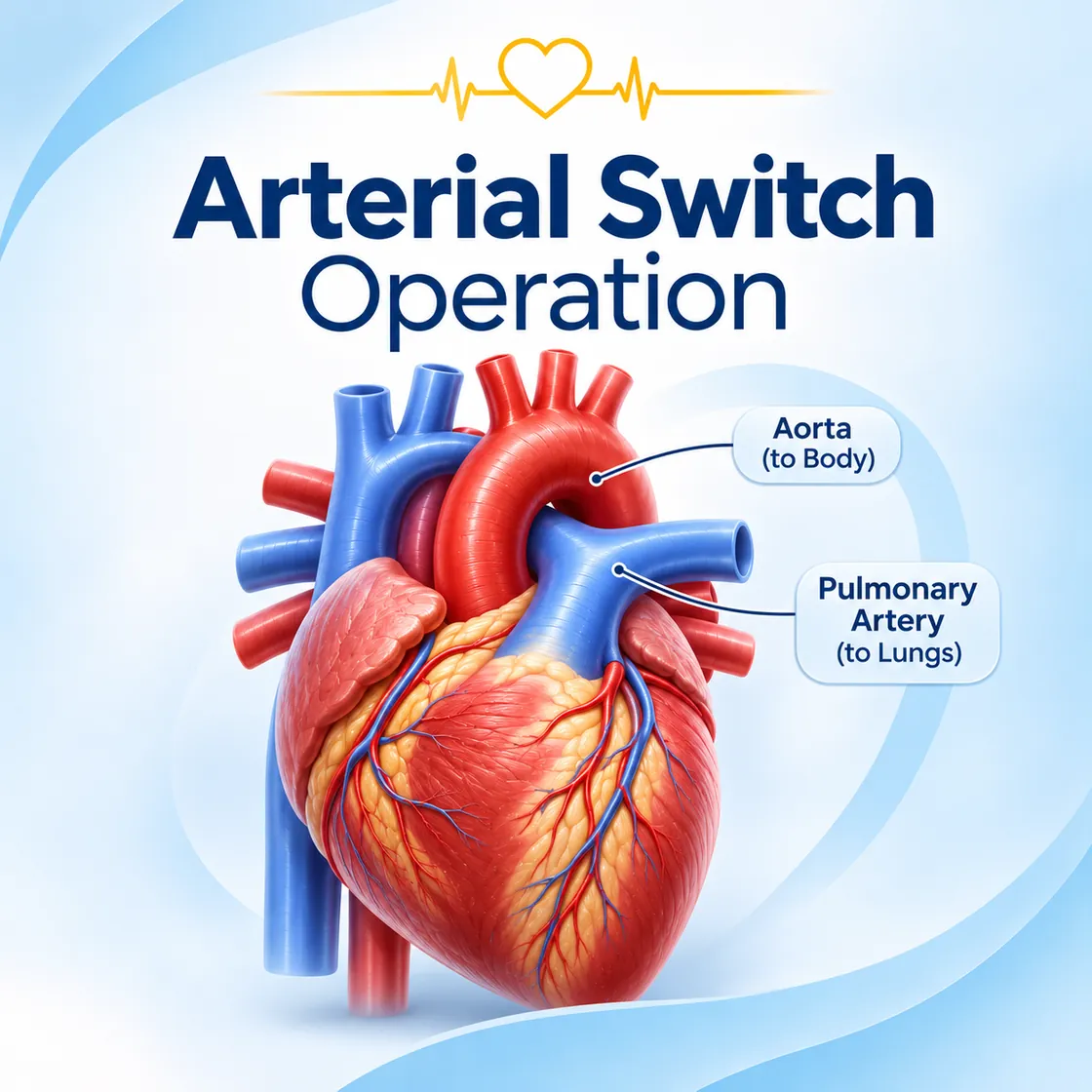
Each defect type calls for a different approach. ASD and VSD repair involves closing an opening between heart chambers using either catheter-based device closure or surgery, depending on size and location. PDA closure usually uses a catheter-based device, with surgery considered when that’s unsuitable. Tetralogy of Fallot repair generally involves closing the ventricular septal defect and relieving blood-flow obstruction to the lungs. AVSD repair closes abnormal openings and repairs the heart valves, often recommended early in symptomatic children. Pulmonary valve stenosis is commonly treated with balloon valvuloplasty, with surgery reserved for complex cases. TGA — one of the most serious defects — is usually corrected with an arterial switch operation performed in the early weeks of life.
Fontan Procedure for Single-Ventricle Heart Defects
The Fontan procedure is a complex type of open-heart surgery performed in selected patients with single-ventricle congenital heart disease. Iran has specialised paediatric cardiac centres offering congenital heart surgery and related cardiac services.
What Is the Fontan Procedure?
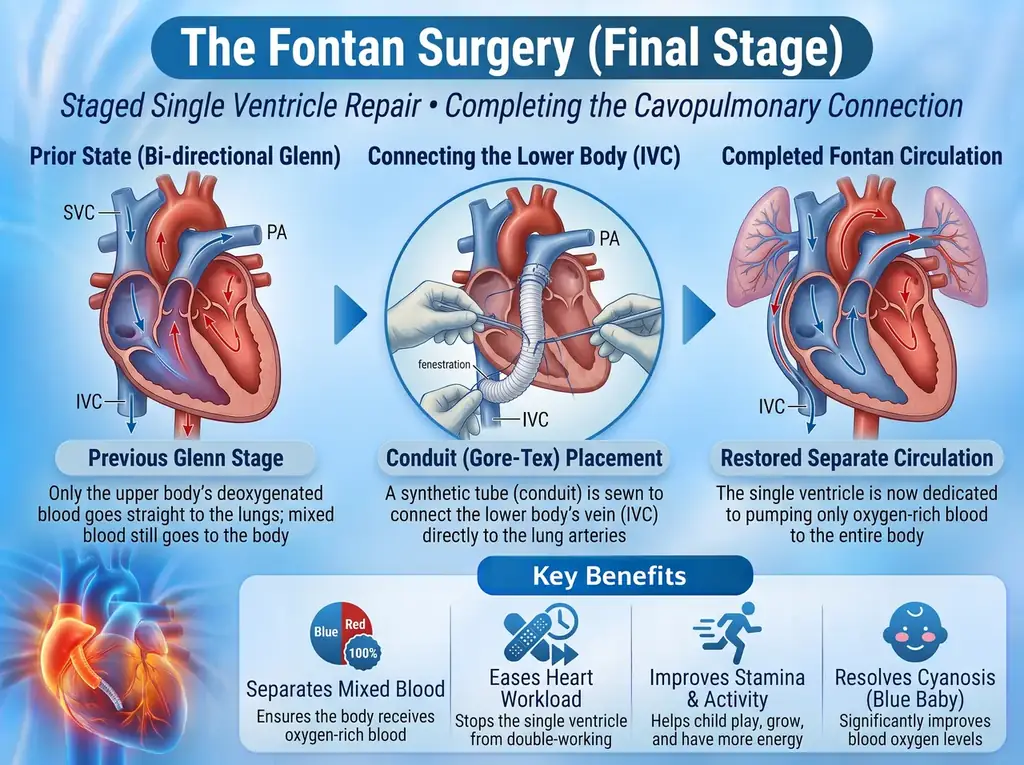
The Fontan procedure is a surgical operation for patients born with complex heart defects in which only one ventricle can support the circulation. It redirects blood returning from the body to the lungs without passing through a pumping right ventricle.
In a normal heart, the right ventricle pumps blood to the lungs. In Fontan circulation, blood from the body flows directly into the pulmonary arteries, reaching the lungs without a separate pumping chamber. The single functioning ventricle then pumps oxygen-rich blood to the rest of the body.
Fontan surgery improves circulation and oxygen levels in patients whose heart defects cannot be corrected with conventional two-ventricle surgery. It is usually the final stage of a staged surgical pathway, following earlier operations such as the Norwood procedure or the bidirectional Glenn procedure.
Who Needs Fontan Surgery?
Fontan surgery may be recommended for children whose single ventricle cannot support both pulmonary and systemic circulation. A specialised congenital heart team makes this decision after detailed assessment.
Conditions that may require the Fontan procedure include:
- Tricuspid atresia
- Hypoplastic left heart syndrome
- Double-inlet left ventricle
- Pulmonary atresia with an intact ventricular septum
- Certain forms of double-outlet right ventricle
Before surgery, doctors assess ventricular function, pulmonary artery pressure and anatomy, atrioventricular valve function, and overall health. Cardiac catheterisation, echocardiography and cardiac MRI help determine suitability.
Types of Fontan Procedures
Two modern techniques are commonly used: the lateral tunnel and the extracardiac Fontan. Both redirect blood from the systemic veins to the pulmonary arteries, but via different pathways.
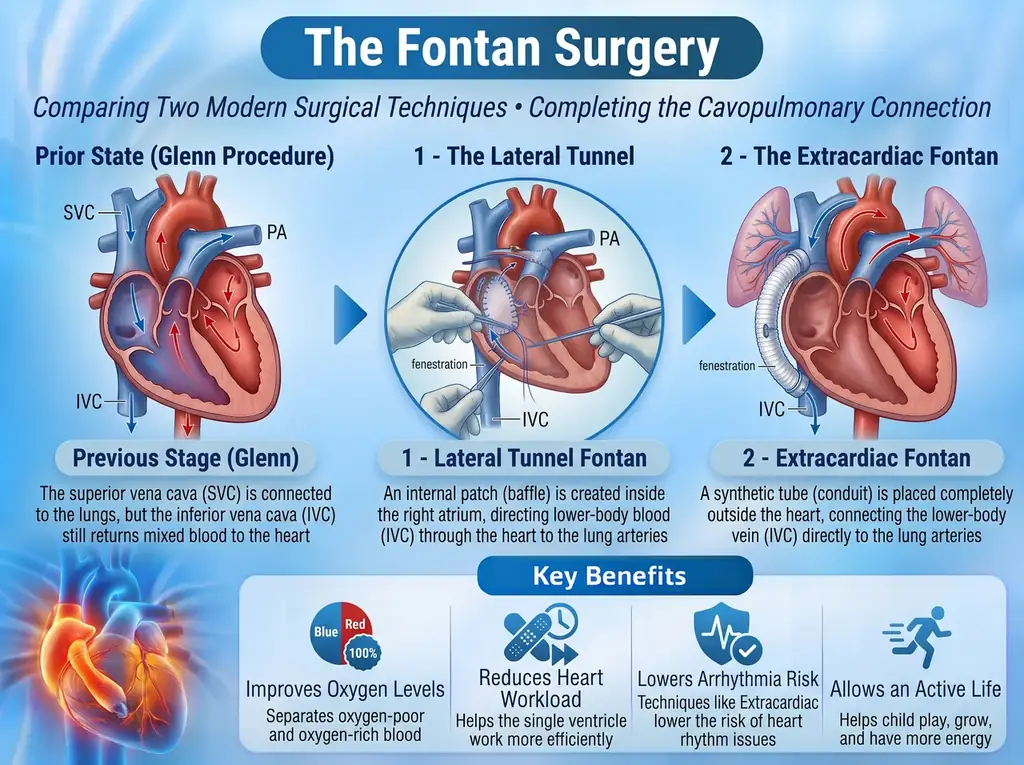
| Feature | Lateral Tunnel Fontan | Extracardiac Fontan |
|---|---|---|
| Pathway | Inside the right atrium | Outside the heart |
| Material | Atrial tissue/patch | Synthetic conduit |
| Considerations | Possible atrial rhythm issues | May reduce rhythm issues |
The choice depends on the patient’s anatomy, previous surgery, age and the surgeon’s assessment.
How Is Fontan Surgery Performed?
Fontan surgery is performed under general anaesthesia by a specialised congenital cardiac team. Pre-operative tests include echocardiography, cardiac catheterisation, cardiac MRI or CT, ECG and blood tests.
During the operation, surgeons connect the systemic veins to the pulmonary arteries using a lateral tunnel or extracardiac conduit. A small fenestration may be created to reduce pressure in early recovery. Surgery commonly takes 4–6 hours, followed by intensive care monitoring of oxygen levels, heart rhythm and fluid balance. Total hospitalisation often ranges from one to two weeks, sometimes longer.
Hospitals and Surgeons for Fontan Surgery in Iran
Worth contacting, subject to confirming current Fontan experience:
- Children’s Medical Center, Tehran – a major paediatric referral and teaching hospital performing complex congenital heart surgery.
- Shahid Rajaei Cardiovascular Medical and Research Center, Tehran – a specialised cardiovascular centre; published Iranian research documents follow-up procedures for previous Fontan patients here.
- Namazee Hospital, Shiraz – listed among Iranian facilities offering paediatric cardiac surgery.
- Shahid Faghihi Hospital, Shiraz – another centre providing paediatric cardiac surgery services.
Families should confirm a dedicated paediatric cardiac ICU, experienced intensivists, and English-speaking coordination support before booking.
Rather than general cardiac surgery experience, families should seek surgeons with documented Fontan outcomes. Tehran’s Children’s Medical Center and Shahid Rajaei Center are key referral points for Fontan specialists, while Shiraz’s Namazee and Shahid Faghihi hospitals also offer paediatric cardiac surgical teams. Before choosing a surgeon, ask about recent Fontan case volume, experience with both surgical techniques, hospital outcome data, and ICU availability.
- Dr Mohammad Reza Mirzaaghayan (Tehran) – Paediatric cardiac surgeon associated with the Department of Paediatric Cardiac Surgery at Children’s Medical Center, Tehran University of Medical Sciences. Co-author of research examining pulmonary artery circulation in patients who had undergone Fontan surgery. A relevant specialist to contact for assessment of children with complex congenital heart conditions.
- Dr Mohammad Ali Navabi (Tehran) – Associated with the Department of Paediatric Cardiac Surgery at Children’s Medical Center. Co-author of published research on Fontan circulation and different modifications of the Fontan procedure. Worth contacting for a specialist opinion on single-ventricle surgery and post-operative management.
- Dr Alireza Dehestani (Tehran) – Listed as a member of the Department of Paediatric Cardiac Surgery at Children’s Medical Center. Co-author of research involving different Fontan surgical modifications. His institutional affiliation and research make him another relevant specialist to contact.
- Professor Ahmad Ali Amirghofran (Shiraz) – Professor of cardiac surgery at Shiraz University of Medical Sciences. Has specialist training in congenital heart surgery at Great Ormond Street Hospital in London. His clinical work includes complex congenital and paediatric cardiac surgery. His published professional profile also describes experience with a temporary total cavopulmonary connection technique, which is relevant to Fontan-related surgery.
Cost of the Fontan Procedure in Iran
As a provisional planning estimate, Fontan surgery in Iran costs approximately US$12,000–25,000, depending on complexity.
| Treatment | Estimated cost |
|---|---|
| Standard Fontan surgery | $12,000–18,000 |
| Complex Fontan surgery | $18,000–25,000+ |
Packages often include surgeon and anaesthesia fees, theatre costs, standard pre-operative tests, hospital accommodation, ICU admission and routine medicines.
By comparison, indicative international estimates include India ($12,600–25,780), Thailand ($15,300–31,050), Turkey ($18,170–36,760) and Germany ($50,740–102,910). These figures are indicative listings rather than guaranteed quotations.
Recovery After Fontan Surgery
- Intensive care: 2–5 days in the ICU following surgery
- General ward stay: One to two weeks, with a total hospital stay of around 2–3 weeks
- Medications: Patients may require antiplatelet or anticoagulant medicines, diuretics, and rhythm medication as prescribed
- Lifelong follow-up: Ongoing specialist care is essential, including echocardiography, rhythm monitoring, and assessment of liver and kidney function
Risks and Possible Complications of Fontan Surgery
Early risks:
- Bleeding
- Infection
- Pleural effusion
- Chylothorax
- Abnormal heart rhythm
- Low cardiac output
Long-term risks:
- Fontan-associated liver disease
- Protein-losing enteropathy
- Plastic bronchitis
- Reduced exercise capacity
- Heart failure
Regular monitoring allows early detection and management, which may involve medication, catheter-based procedures, or — in selected cases — evaluation for advanced heart failure treatment.
Life Expectancy and Long-Term Outcomes After Fontan Surgery
Some long-term studies estimate survival at approximately 85% at 30 years after Fontan surgery, though this is a population-level estimate rather than an individual prediction. Many patients attend school, work and socialise normally, though exercise capacity may be lower than in people with a two-ventricle circulation. Lifelong cardiology follow-up remains essential.
Which hospitals treat heart defects in Iran?

For paediatric cases, consider the following hospitals:
- Children’s Medical Center — Tehran
- Shahid Rajaei Cardiovascular Hospital — Tehran
- Mofid Children’s Hospital — Tehran
- Namazee Hospital — Shiraz
- Shahid Faghihi Hospital — Shiraz
For adults with congenital heart defects, particularly those who have had previous surgery or developed complications later in life, consider Shahid Rajaei Cardiovascular Hospital (Tehran), Tehran Heart Center (Tehran), Shahid Chamran Heart Center (Isfahan) and Razavi Hospital (Mashhad). Patients should confirm that the chosen centre has an adult congenital heart disease team experienced with their specific condition.
Who are the best heart defect surgeons in Iran?
Selecting a surgeon with relevant experience is especially important for newborns, infants or complex abnormalities. One example with a published profile highlighting congenital heart surgery is Dr Mohammadreza Mirzaaghayan, associated with the Children’s Medical Center and Tehran University of Medical Sciences, whose listed interests include congenital heart surgery, transposition of the great arteries and neonatal cardiac surgery. This is a profile-based example rather than a definitive ranking — patients should verify current hospital affiliation and procedure-specific experience.
Before choosing a surgeon, check:
- Medical qualifications: Board certification and specialist training in cardiovascular or paediatric cardiac surgery.
- Relevant experience: Experience treating the specific congenital heart defect.
- Surgical track record: Number and outcomes of similar procedures performed.
- Hospital affiliation: Access to a well-equipped cardiac surgery centre.
- Intensive care facilities: Availability of specialised paediatric or adult cardiac ICUs.
- Post-operative care: Access to cardiac rehabilitation and long-term follow-up.
For catheter-based treatment, consult an interventional paediatric cardiologist, as this is a different specialist from the surgeon.
How much does heart defect repair cost in Iran?
Cost depends on the type of heart defect, the patient’s age, the complexity of surgery, the hospital and surgeon’s fees. The figures below are indicative estimates, not guaranteed hospital quotations.
| Procedure | Estimated cost (USD) |
|---|---|
| ASD closure (catheter-based) | $3,000–$4,300 |
| ASD surgical repair | $4,300–$7,100 |
| VSD closure (catheter-based) | $4,300–$6,100 |
| VSD surgical repair | $6,000–$8,600 |
| PDA closure (catheter-based) | $2,300–$3,300 |
| PDA surgical repair | $3,000–$7,100 |
| Tetralogy of Fallot repair | Around $6,900 |
| Transposition of the Great Arteries repair | Around $7,100 |
| Pulmonary valve stenosis treatment | Around $4,800 |
For an accurate quotation, patients should submit medical records, echocardiography reports and other diagnostic documents for review by the cardiac surgery team.
Choose catheter-based treatment if your defect is suitable for it and you want a shorter hospital stay and faster recovery; choose surgical repair if the defect’s size, location or complexity makes catheter closure unsuitable. Treatment packages may include medical record assessment, surgeon consultation, pre-operative tests, surgeon and anaesthetist fees, hospital admission, devices, intensive care, medication and follow-up before discharge — some also add airport transfers, accommodation, visa assistance and a dedicated coordinator. Always request a written quotation confirming what’s included, as extended ICU stays or complications may be billed separately.
What is recovery like after heart defect repair?
Recovery depends on the procedure, the patient’s age, complexity and overall health. Catheter-based patients generally recover faster than those undergoing open-heart surgery.
| Procedure | Estimated hospital stay |
|---|---|
| ASD catheter-based closure | 1–2 days |
| ASD open-heart surgery | 4–7 days |
| VSD catheter-based closure | 1–3 days |
| VSD open-heart surgery | 5–8 days |
| PDA catheter-based closure | 1–2 days |
| PDA surgical closure | 2–5 days |
| Tetralogy of Fallot repair | 7–14 days |
| AVSD repair | 7–14 days |
| TGA repair | 10–21 days |
| Pulmonary balloon valvuloplasty | 1–3 days |
After catheter-based procedures, most patients return to light daily activities within days. After open-heart surgery, children typically need 6–12 weeks for complete recovery, and adults a similar timeframe, with complex procedures requiring longer. Follow-up care includes echocardiography, ECG monitoring, blood tests, medication review and wound checks — international patients should arrange follow-up with a cardiologist at home before leaving Iran.
As with any cardiac procedure, risks include bleeding, infection, abnormal heart rhythms, blood clots, anaesthesia reactions, residual defects, valve problems, stroke and, rarely, the need for further intervention. Risk levels vary by age, condition and procedure complexity.
How do international patients arrange treatment in Iran?
- Submit medical records, echocardiography reports and imaging.
- A cardiac specialist reviews the documents and assesses the condition.
- The medical team recommends a treatment plan and cost estimate.
- The patient receives hospital, surgeon and admission details.
- Arrange the medical visa, flights and accommodation.
- Complete pre-surgery examinations on admission.
- Undergo treatment and post-operative monitoring.
- Receive discharge instructions and follow-up recommendations.
A valid passport, recent medical reports, a hospital acceptance letter where required, and visa documents are generally needed. It’s advisable to secure hospital admission before booking flights, and a family member should accompany children or patients needing post-surgery assistance. Total stay in Iran ranges from around 5–7 days for simple catheter-based closures to 28–42 days for complex TGA repair — the treating surgeon must confirm fitness to fly.
Is Iran the right choice for your heart defect treatment?
Iran combines experienced cardiac specialists, specialised hospitals, a full range of treatment options and comparatively affordable costs, making it a serious option for families weighing up congenital heart treatment abroad. Suitability still comes down to your specific diagnosis and whether the hospital and surgical team have proven experience with it.
If you’re exploring this path, start by gathering your full medical history and diagnostic reports, then request assessment and a written quotation from a hospital’s international patient department before making travel arrangements.
Frequently asked questions
Yes. Iranian cardiovascular and paediatric hospitals provide open-heart surgery, minimally invasive procedures and catheter-based interventions for congenital heart defects.
Costs range from approximately $2,300 to $8,600 depending on the defect and procedure. Complex surgeries and prolonged intensive care may cost more.
Yes, subject to medical assessment, hospital acceptance and applicable travel requirements. Parents or legal guardians generally need to accompany them.
Catheter-based closure takes approximately 1–3 hours, simple surgical repair 2–4 hours, and complex congenital heart surgery 4–8 hours or longer, excluding preparation and recovery.
Roughly 5–7 days for uncomplicated catheter-based procedures, and 14–28 days or longer after open-heart surgery, with complex cases requiring extended stays.
Yes, for selected ASD and PDA cases via catheter-based closure, and for suitable pulmonary valve stenosis cases via balloon valvuloplasty. Complex defects often still require surgery.
A valid passport, medical history, echocardiography and ECG reports, other relevant imaging, previous surgical reports where applicable, and medical visa documents. The hospital may request further examinations before confirming the treatment plan.
An initial estimate is around US$12,000–25,000 or more, though the final price depends on the patient’s condition and hospital stay.
Fontan completion is commonly performed between 2 and 4 years of age, depending on the child’s anatomy and condition.
The operation commonly takes 4–6 hours, though complex cases may take longer.
No. It is a palliative procedure that improves circulation but does not restore a normal two-ventricle heart. Lifelong monitoring is required.
Some studies report approximately 85% survival at 30 years, though individual outcomes vary with heart function and complications.
Sources
- Cleveland Clinic: Congenital Heart Disease: Symptoms & Treatment
- NHLBI: Congenital Heart Defects – Types
- NHLBI: Congenital Heart Defects – Treatment
- NHLBI: Congenital Heart Defects – Living With
- MedlinePlus: Congenital heart defect – corrective surgery
- MedlinePlus: Pediatric heart surgery
- MedlinePlus: Endocardial cushion defect
- MedlinePlus: Pulmonic valve stenosis
- MedlinePlus: Patent ductus arteriosus
- MedlinePlus: Atrial septal defect (ASD)
- CDC: Dextro-Transposition of the Great Arteries (d-TGA)
- Cleveland Clinic: Open Heart Surgery: Procedure Details & Recovery
- The Sydney Children’s Hospitals Network: Atrial septal defect – transcatheter device closure factsheet
- Alder Hey Children’s NHS Foundation Trust: Cardiac Surgery Information Leaflet
- American Heart Association (Circulation, 2019): Evaluation and Management of the Child and Adult With Fontan Circulation
- 30-Year Survival After the Fontan Operation in Denmark (2025)
- MedlinePlus: Hypoplastic left heart syndrome
- AboutKidsHealth (SickKids): Fenestration closure after a Fontan operation
Written by: Dr. Nikpajooh, Medical Content Specialist with a background in cardiovascular health and international patient care. Dr. Nikpajooh focuses on helping patients navigate complex medical decisions with clear, accurate and accessible information.
Last reviewed: 16 November 2026
